
The secret to growth for energy and utility providers is locked up in their existing customer base.
The businesses leading the industry aren't expanding into home services just to capture more revenue. They're doing it because standing still means getting left behind. Meeting more of your customers' needs is no longer a nice-to-have, it is essential to staying relevant and competitive in the industry.
But expanding offerings is only valuable if you can connect the right services with the right customers. That’s where things get complex.
Much of that customer information is buried in an organization’s ERP system like Cargas and never makes its way to their HubSpot CRM, making it hard for sales teams to identify where the next opportunity is.
As long as these platforms operate in silos, leadership will be left with only half the picture.
What happens when your ERP and CRM are disconnected?
When customer data stays trapped in your ERP, the impact goes beyond operational inefficiency, leading directly to missed sales opportunities and a poor customer experience.
1. Missed revenue opportunities and stalled growth
Without a clear view of customer history, sales and marketing can’t know which customers are ready to be sold another service. This means these cross-sell opportunities are simply not pursued, or worse, that irrelevant offers, like promoting plumbing services to a current plumbing customer, are being promoted.
The same missed revenue opportunities can happen when information from the field isn’t tracked back to sales. If a technician notices an aging furnace during a delivery, that insight may stay buried in an ERP instead of reaching sales as a potential opportunity.
2. Decreased customer lifetime value (LTV) and higher churn risk
Existing customers are the biggest opportunities for growth, but disconnected systems can make it nearly impossible to stay top of mind with relevant messaging. When you lose that visibility, you risk losing those customers to competitors who are paying attention.
Without a unified view across teams, customers end up having to repeat information, receiving conflicting updates, or struggling to get the right service. Over time, that creates a frustrating customer experience, making customers less likely to renew or purchase additional services.
Why is integrating your ERP with HubSpot critical for long-term growth?
Integrating your ERP is the key to turning static customer data into opportunities your teams can act on. ERPs serve as the backbone of your business, handling fuel delivery routing, complex billing, tax logic, and logistics. The opportunity is to make the data inside those systems useful to your growth teams.
Integrating with a modern CRM and customer platform like HubSpot helps you do just that. Your ERP organizes the operational data required to run the business, while your CRM helps your teams understand your customers, manage relationships, and identify opportunities to grow those customer relationships.
The key is connecting the two systems without moving highly sensitive ERP data into your CRM. Instead, you can sync selective “need-to-know” data, such as:
- Service and purchase history: What services customers have bought and when, helping you identify who is strictly a fuel customer vs. who has expanded into home services.
- Contract and subscription status: Track who is currently on a service agreement, who isn't, and who is prime for a contract renewal or upgrade.
- Equipment profiles and specs: Access tank capacities, equipment age, and last service dates to uncover immediate cross-sell and maintenance opportunities.
- Fulfillment logs: Monitor gallons delivered, delivery frequency, and ticket history to anticipate future needs before the customer even asks.
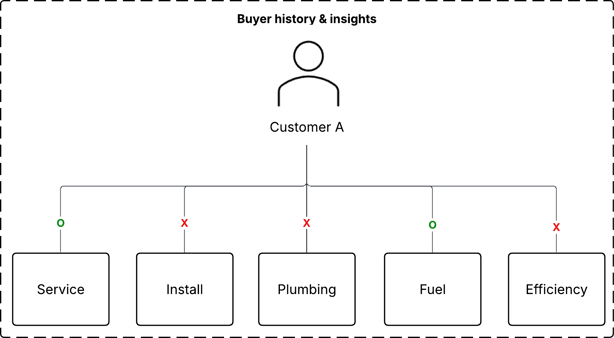
With this information in one place, sales reps can easily understand the history and context of a customer. For example, if a customer buys fuel and basic service but doesn’t use your plumbing, installation, or efficiency services, the account manager can see that gap and follow up with a relevant offer.
What are the business impacts of integrating your ERP data with HubSpot?
By bridging ERP platforms like Cargas with HubSpot, you equip your sales and marketing teams with a clear, actionable view of every customer account.
When these systems work together, energy and utility organizations unlock:
- Increased customer lifetime value: Clean operational data enables precise customer segmentation, allowing you to cross-sell additional service lines across your entire offering.
- Stronger customer retention: As customers rely on you for multiple services, relationship stickiness increases, switching costs go up, and customer churn drops.
- Smarter new customer acquisition: Clear visibility into customer, location, and equipment service patterns gives you a sharper profile of your ideal buyer, making acquisition campaigns significantly more effective.
You already have the customer data you need, successfully turning it into an actionable audience is what gives your teams a clearer path from insight to action.
Ready to unify your systems? Book a tech stack audit with accelant's specialized architects or explore our recent case studies to see how connected systems drive predictable growth.


Blog comments