

Marketing in financial services is nuanced.
A Modern Framework Built for a Regulated, Trust-Driven Industry
Growth teams for financial services organizations are selling through complex buying decisions that carry real financial and emotional weight for their prospects. With longer sales cycles and more risk-averse stakeholders, trust becomes foundational to the decision-making process.
Unlike product-led industries, financial services organizations aren’t selling products, so buyers aren’t evaluating feature sets. Instead, they’re assessing the expertise, judgment, and confidence of the people behind the services they’re considering.
In this environment, marketing playbooks focused on speed, volume, and aggressive conversion tactics tend to fall flat. Financial services buyers don’t move faster because of simply louder messaging or shorter forms. They move forward when they feel confident, informed, and certain they’re evaluating the right partner.
That reality requires a marketing strategy built for education, credibility, and long-term trust rather than short-term wins.
What are the challenges financial services marketing teams face?
Financial services marketing teams operate within a uniquely demanding environment that shapes how, and how quickly, they can go to market.
Service differentiation is more nuanced. Many market offerings appear similar on the surface, which means buyers differentiate based on expertise, judgment, experience, and confidence in the people delivering the work rather than on functional comparisons.
Financial services organizations aren’t selling a platform or a product. They’re selling advisory support, strategic guidance, and long-term partnerships. That means marketing teams must stay closely aligned with the teams delivering the work, whose expertise and client insight are critical to accurate positioning.
Buying decisions are trust-driven and risk-heavy. Prospects take time to research options, validate providers, and align with internal stakeholders. These decisions carry long-term financial implications, which means marketing must support careful evaluation rather than push for speed.
Marketing is responsible for the entire customer lifecycle. Beyond generating new demand, teams must support retention and expansion by reinforcing trust, communicating value over time, and helping existing clients understand and adopt additional services. This is much easier when marketing and sales data live in the same system, giving teams a shared view of the customer lifecycle.
Regulatory and compliance requirements add complexity. Financial services marketing must adhere to evolving regulations from bodies like the SEC and CFPB, which require transparency, accuracy, and consumer protection across all messaging.
What is the most effective marketing strategy for financial services?
The most effective financial marketing strategy is built around trust rather than urgency. Before tactics or channels come into play, teams need clarity around three foundational areas.
First, understand your expertise and where you win. Financial services organizations must clearly define the markets they serve best, the types of clients they support most effectively, and the areas where their experience runs deepest. This includes understanding industries, company size, growth stage, and the specific services where the team delivers the most value.
Second, position your team for success as the experts. Because financial services are delivered by people, marketing must amplify the expertise, perspective, and credibility of the individuals behind the work. Teams need to be prepared to show up as trusted advisors, with clear messaging that reflects real experience rather than abstract positioning.
Finally, amplify that expertise through a marketing mix aligned to your goals and buyers. Once expertise is clearly defined and positioned, marketing can use the right combination of channels to reinforce credibility, support long evaluation cycles, and meet buyers where they are.
How should financial services organizations approach marketing?
In financial services, marketing is not about casting the widest net. It is clearly communicating where your team delivers the most value and why that expertise matters to the buyer.
Define your expertise
Because financial services buyers are evaluating risk as much as capability, they need to understand who you serve best and where your experience runs deepest. That clarity starts with focus. Organizations should clearly define:
- The industries or sub-industries they know well
- The company sizes or growth stages they support most effectively
- The types of complexity their teams are best equipped to handle
Credibility then needs to be visible and specific. Client stories, testimonials, and references are especially critical in financial services, where trust and proof matter more than promises. Content and thought leadership should reinforce this expertise by showing how your team solves real problems in practice through case studies, articles, blogs, podcasts, and other educational formats.
Amplify your message
Once expertise is clearly defined, marketing can amplify it through a mix of channels aligned to business goals, growth stage, and target buyers. Each channel plays a different role, but all should reinforce credibility and confidence rather than push urgency.
Platforms like HubSpot help teams personalize these touchpoints by connecting campaign performance and CRM data in one place.
Content and thought leadership
Content marketing in financial services forms the foundation of awareness by simplifying complex topics, addressing real buyer questions, and demonstrating expertise in a way that supports long evaluation cycles without overwhelming the buyer.
SEO and Search
Search and SEO for financial services play a critical role as buyers research unfamiliar concepts and evaluate providers early in their journey. When SEO prioritizes clarity, accuracy, and depth, it becomes both a discovery channel and a signal of credibility.
Email marketing for financial services supports long, research-driven buying processes by reinforcing key ideas and maintaining familiarity over time. It allows buyers to progress at a pace that aligns with their comfort and confidence.
With HubSpot, teams can segment communications based on lifecycle stage and engagement, keeping outreach relevant without overwhelming buyers.
Social
Social marketing builds familiarity and trust by consistently reinforcing expertise in a low-pressure way. It keeps your brand visible and credible as buyers learn and compare options.
Advertising & Paid Media
Paid media supports awareness and consideration by keeping key messages and high-value content in front of the right audiences. It’s most effective when it reinforces credibility and drives buyers to helpful resources, not just forms.
Events
Events create high-trust opportunities to build relationships and demonstrate expertise in real time. They’re especially valuable for engaging decision-makers who prefer peer validation and live conversation.
Webinars
Webinars help simplify complex topics while showcasing expertise in a structured, educational format. They give buyers a clear way to engage deeper without committing to a sales conversation too early.
Why should financial services marketing extend beyond initial conversion?
In financial services, conversion is not the finish line.
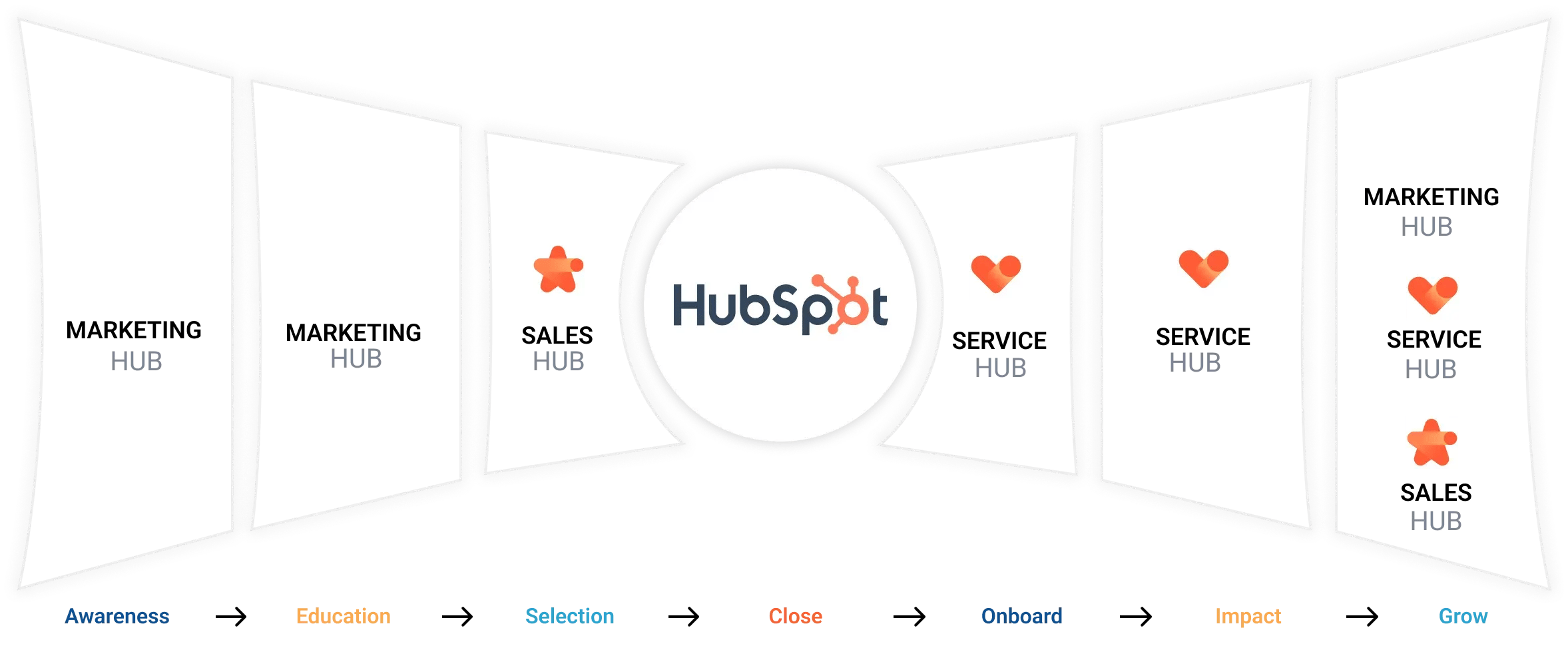
Clients expect continued clarity, guidance, and reassurance after they choose a provider. Marketing plays an important role in reinforcing trust and confidence well beyond the initial sale.
Retention and long-term value are supported through consistent, helpful engagement. Onboarding resources, ongoing education, and timely communication help clients understand their services, navigate change, and feel confident in their decisions.
To do this well, marketing needs visibility into the full client journey. This is where having everything in one platform becomes a major advantage. With HubSpot, financial services teams can connect marketing, sales, and client engagement data in a single system, making it easier to deliver consistent lifecycle communication and identify expansion opportunities as client needs evolve.
That visibility also makes it easier to support expansion and re-engagement as relationships mature.
How should financial services organizations measure marketing ROI?
The best way to measure ROI in financial services marketing is to look beyond last-touch models and evaluate how marketing influences buyer readiness over time.
Long sales cycles, multiple stakeholders, and extended evaluation periods mean that marketing influence often accumulates over time rather than appearing in a single conversion moment. Educational content, ongoing engagement, and trust-building touchpoints frequently shape decisions in ways that are not captured by immediate metrics.
A more effective approach to attribution focuses on how buyers progress throughout their journey. Indicators such as repeated engagement with high-value content, deeper exploration of specific topics, and improved quality of sales conversations provide a clearer view of marketing’s impact.
Cross-channel measurement is essential. Content, email, SEO, and awareness efforts work together to influence buyer understanding over time. Evaluating these interactions collectively rather than in isolation helps teams understand what is actually driving readiness and momentum.
With HubSpot, teams can tie content, email, and campaign engagement directly to pipeline and customer outcomes, making attribution more actionable.
When attribution is framed in this way, reporting becomes more actionable. Marketing leaders gain better visibility into how their efforts support readiness, pipeline, and long-term growth.
What outcomes can financial services organizations expect from this framework?
When financial services organizations align marketing around clarity, education, and credibility, the impact extends across the entire customer lifecycle.
Buyers move through evaluations with greater confidence and a clearer understanding of their options. Sales teams engage with better-prepared prospects, leading to more productive conversations and stronger alignment.
Over time, organizations see:
- Higher-quality inbound opportunities
- More efficient sales cycles driven by readiness, not pressure
- Stronger cross-channel performance as content, email, search, and awareness reinforce one another
- Clearer visibility into marketing’s impact
- Improved retention, expansion, and long-term client value
This framework creates a cohesive marketing system designed to reduce uncertainty and support sustainable growth over time.
accelant works with financial services organizations to put this approach into practice using HubSpot. We help teams turn complexity into clarity and build marketing systems that drive momentum across the full customer lifecycle.
See How This Approach Works in Financial Services
The trust-driven marketing approach outlined above is already helping financial services organizations improve visibility, alignment, and growth.

FAQ
Q: How do you market a financial services business effectively?
Effective financial services marketing focuses on education and credibility. Buyers need clarity and confidence, not urgency. Marketing should support long evaluation cycles by building trust over time.
Q: What are the best marketing strategies for financial services?
The strongest strategies combine educational content, search visibility, email nurturing, and thought leadership. These channels work together to support trust-driven decision making rather than quick conversion.
Q: How should financial services organizations adapt marketing strategies to changing regulations?
Successful teams prioritize clear, accurate messaging and close collaboration between marketing and compliance. Educational content helps organizations stay compliant while still delivering value.
Q: Why is email marketing important for financial services organizations?
Email supports long buying cycles by reinforcing expertise and maintaining familiarity. Educational email programs help buyers move forward at their own pace.
The trust-driven marketing approach outlined above is already helping financial services organizations improve visibility, alignment, and growth.
.png?height=500&name=O%26G%20ERP%20growth%20(1).png)


Blog comments